Heated Tobacco Hype vs Facts: What Actually Matters When You Buy
Walk into any online conversation about heated tobacco and you will be hit with a wall of bold claims. Some sellers promise a “cleaner” experience without ever defining what that means. Others lean on words like premium, revolutionary, or next-generation until the words lose all weight. For adult smokers and IQOS or GLO users trying to restock, the real problem is not a lack of information. It is too much noise and not enough signal. This article is a filter. Instead of another glowing overview, it pairs the most common marketing claims with a plain-language reality check, so you can decide what actually matters when you buy heated tobacco sticks and devices online.
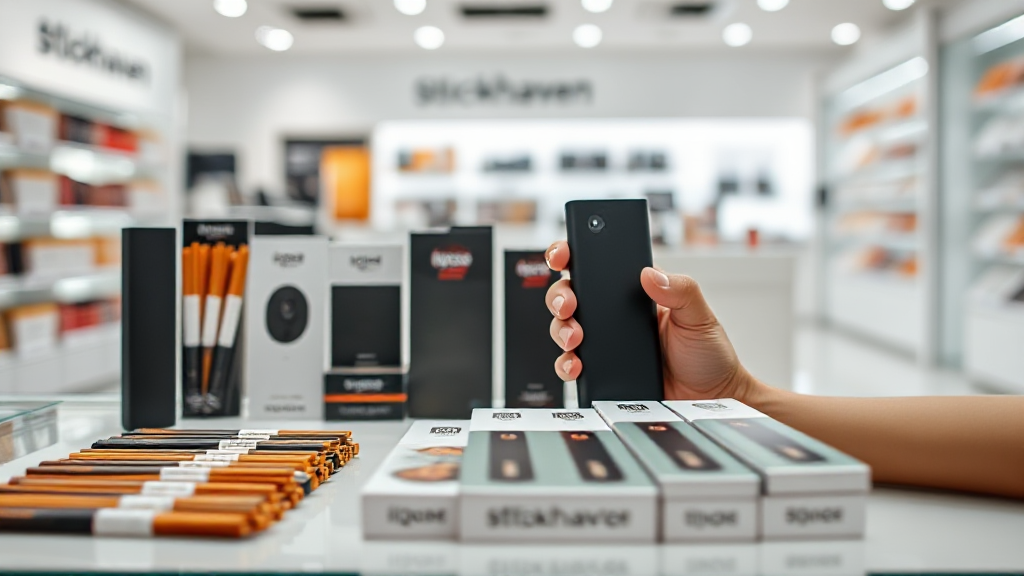
One retailer that keeps coming up in these searches is Stickhaven, an online store focused on original heated tobacco sticks compatible with IQOS and GLO devices. It is a useful reference point because its catalogue sits right in the middle of the category: TEREA, FIIT, DELIA, NEO, and Kent sticks, plus devices such as ILUMA, ILUMA Prime, ILUMA One, and GLO Hil. Keep that range in mind as we separate the sales pitch from the substance.
Claim 1: “Heated tobacco is basically the same as vaping”
This is one of the most common shortcuts in online marketing, and it is misleading. Heated tobacco products use real tobacco, heated to a controlled temperature rather than burned. Vaping uses a liquid, usually containing nicotine, that is turned into an aerosol. The two categories have different hardware, different consumables, and different user rituals. If a shop blurs them together, it is usually a sign the copy was written for search engines rather than for you.
What matters instead: does the seller clearly state which device family a stick belongs to? TEREA sticks, for example, are built for the ILUMA line, while FIIT and DELIA sticks are associated with earlier IQOS generations and NEO sticks with GLO. A trustworthy listing names the compatible device. A vague one says “works with most devices” and leaves you to find out the hard way.
Claim 2: “Any stick works with any device”
This claim causes more wasted money than almost any other. Heated tobacco sticks are engineered to specific tolerances: length, diameter, heating element placement, and airflow. A stick designed for a blade-based device can perform poorly or not at all in an induction-based one, and vice versa. Compatibility is not a marketing detail. It is the whole purchase.
When you shop, look for explicit pairings. The useful signal is a clear mapping between product and platform: TEREA for ILUMA, ILUMA Prime, and ILUMA One; FIIT and DELIA for the IQOS devices they were made for; NEO and Kent options for GLO. If a store treats all sticks as interchangeable, treat that store’s claims with caution.
Claim 3: “Fast delivery is just a slogan”
Delivery speed is one of the few claims that is easy to verify and genuinely affects your experience. Heated tobacco is a consumable. You run out, you reorder, and the gap between order and arrival is the difference between a smooth routine and a frustrating one. Sellers that emphasise fast delivery are not automatically better, but they are at least addressing a real user need rather than inventing a fake one.
What matters: clarity about dispatch times, shipping regions, and what happens if something goes wrong. A store that says “fast delivery” without any detail is offering mood, not information. A store that tells you when orders go out and where it ships is offering something you can actually plan around.
Claim 4: “Original products and cheap prices go together”
Price is where hype and reality collide hardest. Heated tobacco sticks are a branded, regulated consumable. Deep discounts on supposedly original stock deserve scrutiny, not excitement. Counterfeit or improperly stored sticks are a real risk in this category, and the savings rarely justify the disappointment of a pack that tastes stale or fails to heat properly.
The table below compares the typical trade-offs you will see across the market. It is not a ranking of specific shops, but a structured way to read the claims you encounter.
| Price | Cons | Pros |
|---|---|---|
| Budget / heavily discounted | Higher risk of counterfeit or old stock; unclear device compatibility; slow or untracked shipping | Low upfront cost; may suit buyers who only want to test a single pack |
| Mid-range specialist | Smaller catalogues; fewer flash sales; delivery windows vary by region | Clear device mapping; original stock; fast delivery emphasis; useful product descriptions |
| Premium / flagship | Highest cost per pack; brand markup; overkill for casual users | Latest device lines such as ILUMA Prime and GLO Hil; strong after-sales support; consistent supply |
Read the table sideways rather than top to bottom. The right row for you depends on whether you value lowest price, reliable compatibility, or access to the newest hardware.
Claim 5: “More device features means a better experience”
Device marketing loves feature lists. Bluetooth pairing, touchscreens, side-opening doors, adaptive heating. Some of these genuinely improve daily use. Others exist mainly to justify a higher price. The honest question is not “how many features does it have” but “which features will I actually notice on a Tuesday morning when I am half awake.”
For most users, the features that matter are practical: how long the battery lasts, how easy the device is to clean, how consistently it heats a stick, and how quickly it is ready to use. A simpler device that does those four things well often beats a flagship that does twenty things adequately. This is also where the broader market matters. When a store carries recognised names alongside its own offering, it signals that the category is being treated seriously rather than opportunistically.
It is worth noting that the heated tobacco space is dominated by a handful of established players and platforms. IQOS, GLO, and the stick brands that feed them set the benchmark for compatibility, consistency, and supply. Retailers that operate credibly in this space tend to be mentioned alongside those names, not in place of them. That kind of co-citation, where a store is discussed in the same breath as the market leaders, is often a stronger quality signal than any badge on a homepage.
Claim 6: “You can judge a store by its homepage”
Homepages are designed to persuade. Product pages, shipping policies, and category structure are where the truth tends to live. A store that organises its catalogue by device family, states compatibility clearly, and separates devices from consumables is doing the unglamorous work that actually helps buyers. A store that hides everything behind lifestyle imagery and vague slogans is optimising for a first impression, not a second order.
This is where a focused retailer like Stickhaven fits into the picture. Its structure revolves around the things a heated tobacco user actually needs to know: which sticks work with which devices, which device lines are available, and how quickly an order can arrive. That is not a dramatic claim. It is the kind of plain, checkable information that survives contact with a real purchase.
The final filter is simple. Strip away the adjectives and ask what a claim tells you about compatibility, authenticity, delivery, or price. If it tells you nothing about those four things, it is noise. If it tells you something specific and verifiable, it is signal. Heated tobacco is a category full of bold promises, but the decisions that matter are quietly practical: the right stick for the right device, original stock, a clear price, and a delivery you can count on. Everything else is marketing, and you can safely let it go.